
Contact
+90 (539) 339 31 39
Marble Kitchen Countertops: Pros, Cons, Colors and Care Guide
The kitchen is the most used and most visible room in the home, so the countertop you choose shapes both everyday comfort and how the space will look for decades. A marble kitchen countertop brings natural veining, a cool touch and a timeless look that has kept it at the top of luxury kitchen design for generations. In this guide we cover the pros and cons of marble countertops, how to choose thickness, edge profile and finish, what drives the cost, and how the Palissandro marble family performs in the kitchen.
Why Choose Marble Countertops for Your Kitchen?
A marble countertop is made by cutting quarried blocks into slabs, then shaping them to size and finishing the edges and surface. Unlike engineered surfaces, every marble slab is one of a kind: even two slabs cut from the same block never share exactly the same vein pattern. That individuality turns a marble worktop from a simple building material into the signature of the kitchen.
Marble is also remarkably versatile. It suits classic, modern, minimalist and rustic kitchens alike. A light-toned marble opens up a compact kitchen, while a dark, dramatically veined stone creates a strong focal point in a larger space. If you would like a broader introduction to the stone itself, read our guide to marble vs granite vs porcelain, where we compare the three most popular surfaces side by side.
Marble Countertops Pros and Cons
The best decision comes from weighing the strengths of marble against the points that require a little care.
Advantages of Marble Countertops
- Unique appearance: each slab carries a pattern formed by nature over millions of years.
- Naturally cool surface: marble stays cool to the touch, which makes it ideal for rolling dough and pastry work.
- Long lifespan: with proper care a marble countertop lasts for decades, and the surface can be honed and polished again whenever needed.
- Added value: natural stone countertops raise the perceived value and prestige of a home.
What to Watch Out For
- Sensitivity to acids: lemon juice, vinegar, wine and tomato sauce can leave dull marks known as etching if left on the surface.
- Porosity: unsealed marble can absorb oil and colored liquids, so sealing is essential.
- Impact and scratches: marble is softer than granite, and heavy or sharp impacts can chip the edges.
Almost all of these drawbacks can be managed with the right habits. We explain daily cleaning and stain removal step by step in our guide on how to clean and care for marble.
Do Marble Countertops Scratch or Stain Easily?
One of the most common questions is whether marble countertops scratch. Marble ranks lower than granite on the Mohs hardness scale, so cutting directly on the surface can leave fine marks. Using a cutting board protects both the countertop and your knives. Palissandro marble has a dolomitic structure that is denser than many classic calcite marbles, but cutting directly on it is still not recommended.
As for staining, the real answer depends on sealing. A properly sealed marble countertop resists most everyday spills as long as they are wiped up promptly. Marble also handles heat well, yet placing a very hot pan straight from the stove onto the surface can damage the sealer or cause discoloration. A trivet is the simplest way to keep the countertop looking new.
Best Marble for Kitchen Countertops: Palissandro Colors
Color and vein character define the whole mood of a kitchen. The Palissandro family offers a wide palette that fits very different design languages.
Palissandro Bronze for Warm, Flowing Kitchens
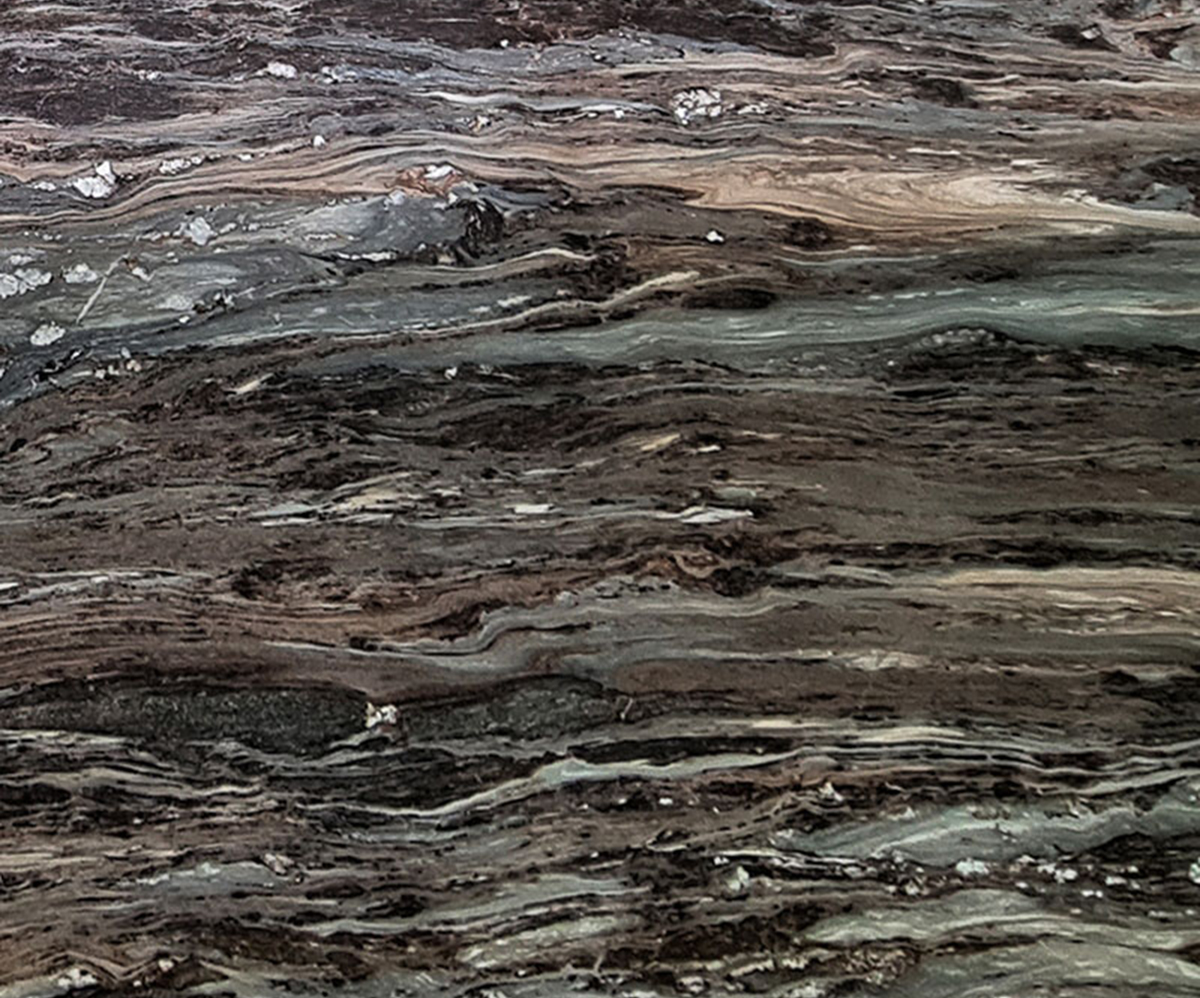
Palissandro Bronze marble, with horizontal veins in bronze, copper and earthy tones, is one of the most popular choices for kitchen countertops. Paired with walnut or oak cabinetry it gives the kitchen a warm, welcoming character. On kitchen islands, a waterfall edge lets the veins flow uninterrupted from the top down the side panel for a truly striking effect.
Palissandro Black for a Bold, Modern Look
With gray and white veins running across a deep background, Palissandro Black marble creates a powerful contrast in contemporary kitchens. It stands out against white or light wood cabinets and delivers a sleek, monolithic look with dark lacquered units. Continuing the same slab onto the backsplash gives a seamless, cohesive finish.
Palissandro Classic, Royal and Avellano for Lighter Kitchens
For a balanced and versatile look, Palissandro Classic marble combines a cream-beige base with brown and gray veins that suit both traditional and modern kitchens. Palissandro Royal marble, with its soft pinkish and creamy background, makes smaller kitchens feel brighter, while Palissandro Avellano marble, with cappuccino-toned veins on cream, is ideal for natural, wood-rich kitchen concepts.
Marble Countertop Thickness and Edge Profiles
The most common marble thicknesses for kitchen countertops are 2 cm and 3 cm. A 2 cm slab offers a lighter, slimmer look, while 3 cm provides a sturdier structure, especially on long spans and kitchen islands. If you prefer a chunkier appearance, a mitered or laminated edge can create a visual thickness of 4 to 6 cm without using a full-thickness block.
The edge profile also changes the character of the countertop. A square edge draws a clean line in modern kitchens, a slightly eased edge reduces the risk of chipping in daily use, and half bullnose or bevelled edges suit classic interiors.
Polished vs Honed Marble Countertops
A polished finish brings out the colors and depth of the veining most vividly, and because it reflects light it makes the kitchen feel brighter. However, etch marks from acidic foods are more visible on a glossy surface. A honed (matte) finish has a softer, more natural look and hides small everyday marks better. Busy family kitchens often benefit from a honed finish, while polished marble is a popular choice for show kitchens and statement islands.
How Much Do Marble Countertops Cost?
Marble countertop cost cannot be summed up with a single price per square meter, because several variables shape the final figure:
- Marble variety and grade: rare stones and flawless slabs with consistent veining are more valuable.
- Thickness: 3 cm slabs cost more than 2 cm slabs.
- Fabrication details: sink and hob cut-outs, undermount sinks, waterfall edges and custom profiles all add to the price.
- Backsplash and island work: the total area covered and special cuts such as bookmatching increase the cost.
- Delivery and installation: project location and installation complexity are also reflected in the budget.
How to Care for a Marble Kitchen Countertop
The secret to a long-lasting marble countertop is simple, consistent care. Warm water and a pH-neutral stone cleaner are all you need for daily cleaning. Wipe up spills promptly and dry the surface after cleaning. Depending on use, reseal the countertop every 6 to 12 months. For a quick test, place a few drops of water on the surface: if the water soaks in and leaves a dark spot within a few minutes, it is time to reseal.
Ordering and Installing Your Marble Countertop
A marble countertop project usually starts with a site visit and templating. Final measurements taken after the cabinets are installed are essential for a precise cut. Next comes slab selection; if possible, view the slabs in person and plan how the veins will sit on the countertop. After cutting, edge work and finishing, the countertop is installed and sealed.
Still undecided between natural stone and engineered alternatives? Our comparison of marble, granite and porcelain surfaces will help you choose with confidence. To find the right Palissandro variety for your project, request samples or get a quote, simply contact our team.
Other Blogs
Marble vs Granite vs Porcelain: Which Is Best for Countertops and Floors?
We compare marble, granite and porcelain on durability, maintenance, cost and appearance to help you choose for kitchens, bathrooms and floors.

How to Clean Marble: Marble Care and Stain Removal Guide
Daily marble cleaning, products to avoid, removing oil, coffee and wine stains, fixing etching, sealing frequency and marble care by area.